seri-nwac-logo

Accreditation builds trust

When a school is accredited, families gain confidence that teaching quality, student safety, governance, and support systems are continuously evaluated and improved.

All our work aligns with the National Education Policy 2020 (NEP 2020), emphasizing student-centered learning, competency-based education, data-driven decision-making, and transparency ensuring global relevance with national compliance.

accreditation

What is Accreditation?

Accreditation is an official quality check for a school. It means an independent organization reviews the school's teaching, curriculum, safety, staff qualifications, and overall standards, and then certifies that the school provides reliable, high-quality education. It shows parents and authorities that the school is trustworthy and meets recognized educational standards.

Why is Accreditation Important?

Accreditation plays a vital role in strengthening the overall quality and credibility of schools. It provides a robust quality assurance framework that aligns teaching and operational practices with the vision of NEP 2020. It supports improved academic outcomes, encourages holistic growth of students, and ensures schools follow globally benchmarked standards—building trust among parents and all stakeholders.

NEP 2020 on School Accreditation

The National Education Policy (NEP 2020) emphasizes accreditation as a vital mechanism to ensure quality, transparency, and accountability in education. It promotes outcome-based standards where every institution is periodically accredited to drive continuous improvement and public trust in the education system.

Cognia Accreditation aligned with NEP 2020

For over 130 years, Cognia has been delivering what NEP 2020 envisions for Indian schools. Its performance standards align with NEP 2020, driving continuous improvement through data-driven evaluation, transparency, and accountability. Cognia focuses on holistic learner development—academic, emotional, and social—while fostering inclusion, diversity, and equity in every classroom. It also empowers teachers through mentoring and collaboration, and strengthens school leadership that champions learner success and institutional growth.

Quality Assurance

Independent review of teaching, curriculum, and school operations.

Global Recognition

Accreditation signals that your school meets global benchmarks.

What We Offer?

Step-by-step support for schools committed to achieving international quality standards, credible academic pathways, and measurable improvement—aligned with NEP 2020 and global best practices.

Accreditation

Accreditation validates that a school meets rigorous international standards in teaching, leadership, and student outcomes. It strengthens credibility, drives continuous improvement, and builds trust with parents, universities, and global partners.

Read More

Green School Certification

The Green School Certification helps schools adopt eco-friendly practices, integrate sustainability into learning, and demonstrate leadership in building a sustainable future.

Read More

Affiliation

Affiliation enables schools to deliver a validated U.S. curriculum and credit system, offering internationally recognized American qualifications within their local environment. It enhances academic reputation, expands global pathways for students, and positions schools as forward-thinking institutions.

Read More

American High School Program

The American High School Program delivers a globally recognized, U.S. credit-based K-12 curriculum that builds critical thinking, creativity, and college readiness. Students earn an accredited American High School Diploma accepted by 500+ universities worldwide.

Read More

500+ University Options Available

Our American High School and Dual Diploma pathways open access to 500+ universities worldwide, providing globally recognized credentials and strong academic readiness. Schools empower students with flexible pathways, future-focused skills, and a competitive edge in global higher education.

Read More

US Dual Diploma Program

The U.S. Dual Diploma Program allows students to earn their national high school certificate alongside an accredited American High School Diploma. This flexible pathway builds global readiness and strengthens opportunities for international university admissions.

Read More

We know schools because we're in schools

Our global network of educators guides you to diagnose challenges and implement change.

40,000

Institutions

100+

Countries

17,000,000

Students

Who we serve

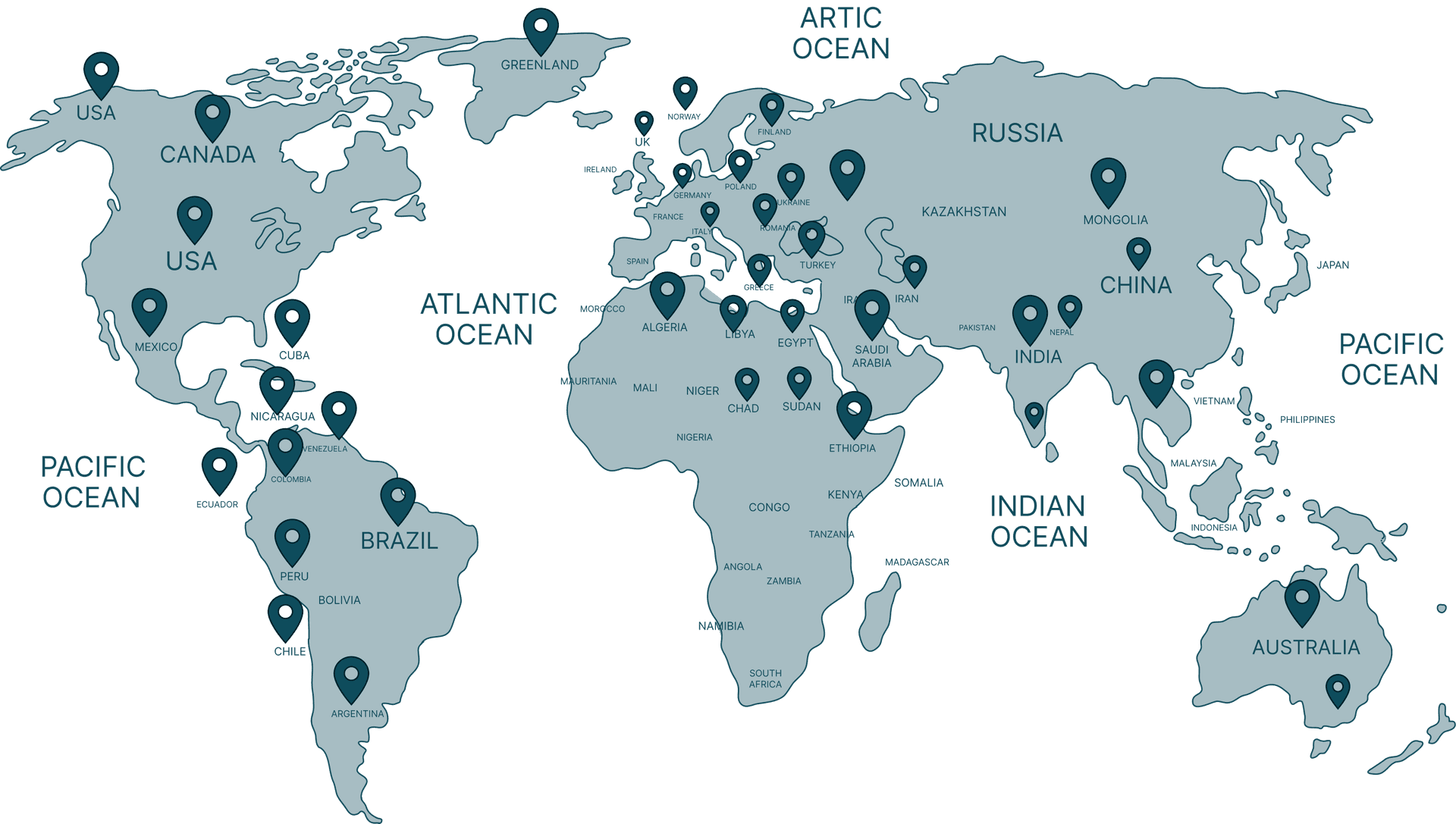
We serve education providers of all types, including public, private, early learning, digital, and charter schools as well as State Education Agencies (SEAs). The impact of our accreditation, assessment, and improvement services reaches around the globe.

Global map showing regions served by SERI
GRI sustainability reporting logo

Sustainability Reporting

We are here to help

Frequently Asked Questions

What is accreditation?

Accreditation is a structured quality-assurance process where a school evaluates itself and is also reviewed by an external, independent body to confirm it meets defined standards.

  • Covers all areas of school functioning - academics, governance, processes and outcomes.
  • Involves self-study, peer review and periodic monitoring.
  • Acts like a 'fitness test' that signals a school is above minimum benchmarks of performance.
Why is accreditation important for a school?
  • Helps institutions understand and meet clear quality benchmarks.
  • Gives parents and students a reliable way to choose credible schools.
  • Engages leadership, teachers, students and community in continuous improvement.
  • Supports long-term planning, self-regulation and accountability.
What difference does a reputed accreditation make to students and parents?
  • Assures that the school delivers what it claims in its mission and program.
  • Improves recognition of the school's certificates and transcripts.
  • Supports student mobility, scholarships and further study options.
  • Signals trust, stability and quality to the wider community.
What is Cognia?

Cognia is a global non-profit school improvement and accreditation organization that works with thousands of schools and systems worldwide.

  • Combines over a century of experience in accreditation with modern school-improvement practices.
  • Provides external review teams, performance standards and continuous improvement tools.
  • Includes legacy bodies such as NCA CASI, SACS CASI and NWAC under a unified framework.
What are Cognia's Standards for Quality Schools?

Cognia's Performance Standards describe what high-quality schools should demonstrate across leadership, learning and resource use. Schools use these as a roadmap for improvement and accreditation readiness.

For full details, schools are expected to refer to the official Cognia Performance Standards documentation.

Why were six regional accrediting agencies created in the United States?

For K-12 and higher education, the U.S. historically divided accreditation into six geographic regions, each served by a regional accrediting agency.

  • Middle States Association of Colleges and Schools.
  • New England Association of Schools and Colleges.
  • North Central Association of Colleges and Schools.
  • Northwest Accreditation Commission.
  • Southern Association of Colleges and Schools.
  • Western Association of Schools and Colleges.
What is NWAC?

NWAC (Northwest Accreditation Commission) is one of the historic U.S. regional accrediting agencies whose legacy is now part of Cognia.

  • Began in 1917 as an association for secondary and higher institutions in the U.S. Northwest.
  • Over time expanded to accredit schools across several U.S. states.
  • Later integrated into the Cognia family, bringing its accreditation heritage with it.